
Low-clearance & track
Low-clearance & lowered car towing
Lowered car towing done properly: a low loader and shallow-approach ramps that load slammed, aero-kitted and race-prepped cars other trucks turn away.
"Sorry mate, can't load that". You won't hear it from us.
If you've ever watched a tow driver eye off your front lip and shake his head, you know the problem: a standard tilt tray's approach angle will grind a lowered car's splitter, sump or exhaust before the rear wheels ever leave the ground. Most operators just refuse the job. The ones who don't often shouldn't have accepted it.
HaulKing is set up specifically for lowered car towing. Our trays lay down to a 4-degree load angle. That is the number that actually matters, and it is worth understanding why: ground clearance tells you how low the car sits, but the approach angle tells you whether it will touch on the way up. A car with generous clearance and a long front overhang can still ground out on a steep ramp, while a genuinely slammed car will load cleanly over a shallow enough angle. Four degrees is shallow enough for static-dropped street cars, air-ride sitting on the bump stops, race cars on slicks, and splitters millimetres off the deck.
The trucks say Lowered & Prestige Vehicle Specialist on the side because this is not a sideline. It is the work.
Cars we regularly load
- Static and bagged street builds: measured, ramped and loaded without a scrape
- Track and race cars: circuit transport to Sydney Motorsport Park and beyond
- Supercars and hypercars: factory-low noses treated with the respect they cost
- Non-runners: winched gently with wheel dollies where needed
Tell us the car and roughly how low it sits when you book (a photo helps) and we'll arrive with the right setup first time.
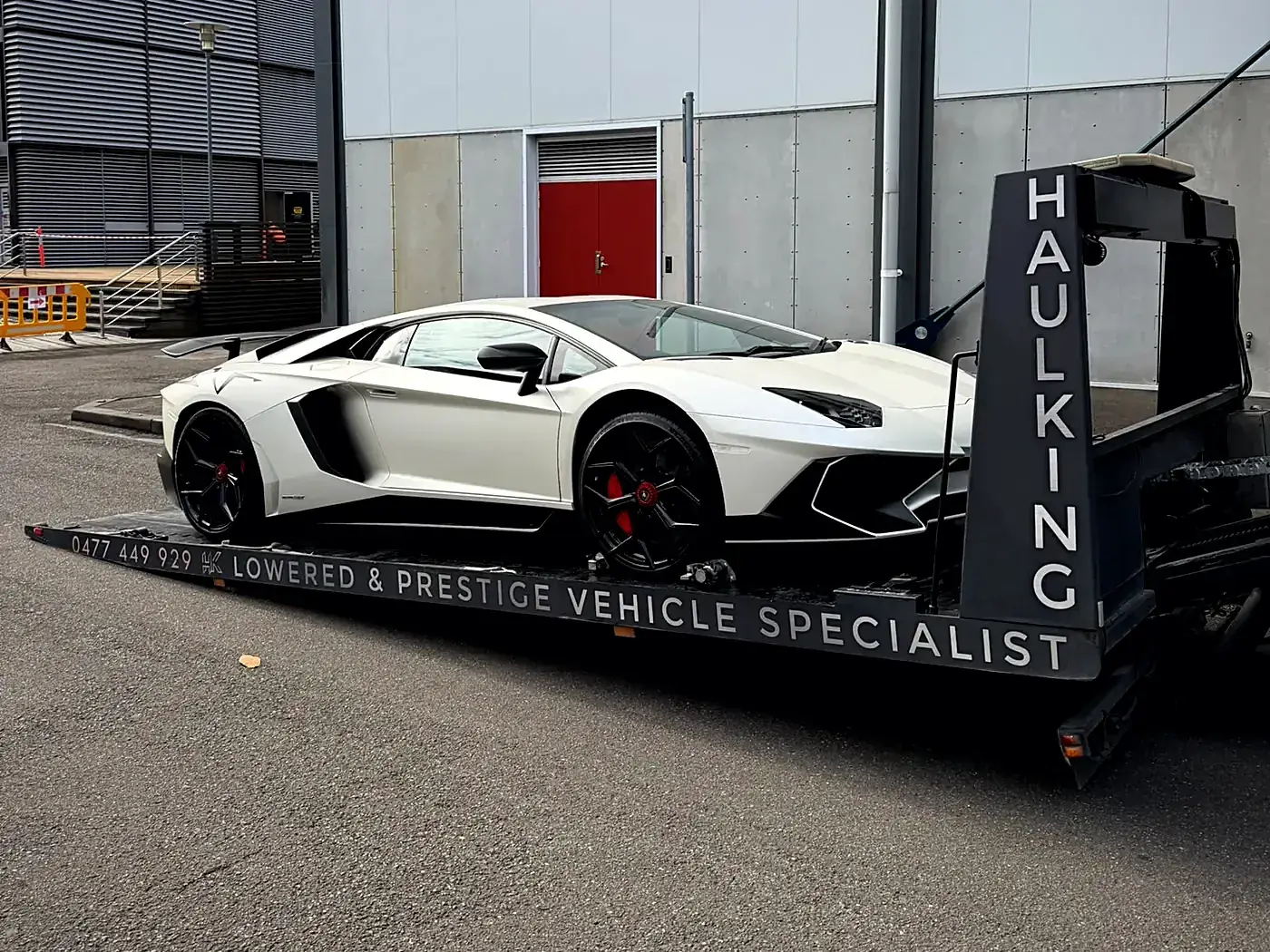
Low cars, loaded clean.
The 4-degree tray in motion: a red Ferrari and the low-loader itself, so you can see exactly how a car this low gets on and off without a scrape.
Good to know.
How low can a car be for you to still load it?
Our trays lay down to a 4-degree load angle, which is the figure that decides it. Send a photo of the car sitting at its normal ride height with your booking and we'll confirm the setup before we arrive — it takes a minute and it means the right gear turns up first time.
What's the difference between ground clearance and approach angle?
Ground clearance is how high the lowest point of the car sits off the road. Approach angle is how steep a ramp the car can climb before something touches. They are not the same thing, and the angle is what actually determines whether a car loads cleanly. A car with reasonable clearance but a long front overhang can still ground out on a steep tilt tray, while a genuinely slammed car with a short overhang will go up a shallow ramp without a mark. That is why we quote our tray angle — 4 degrees — rather than only a clearance number.
Can you transport my car to and from track days?
Yes — Sydney Motorsport Park, Wakefield/One Raceway and other circuits by arrangement. Book ahead for event weekends; trays fill fast.
My lowered car doesn't run. Is that a problem?
No. We winch non-runners slowly and use wheel dollies where wheels don't roll. Low and dead is still loadable. It just takes patience, which is the whole point of using us.
Will you refuse the job if the car is too low?
If we genuinely can't load a car without damaging it, we'll tell you before we start, not after. That said, low is our specialty. It's rare we meet a car we can't take.